Answers
Ask questions and get answers from experienced industry professionals
Search: 襄阳近30天天气

Daniel Kurtenbach asked:

Jason Clarke of Clarke Contractors, Inc. PRO answered:
Our contractors tell us 30-45 days after it can be sealed.
Donald Logan asked:

Jim Myers of AASI Home Improvement Systems PRO answered:
J.H. Fiber cement is composed of 70% concrete and 30% celluoose. Cellulose being ground up paper. Both water and cement wick moisture so if you use these products be sure to read and follow installation instructions. Leave no surface unpainted or it will draw moisture and deteriorate. Seen it many times. It is also dusty if you cut it with a saw. It is heavy, breaks easily if flexed. It is also heavy so it only comes in 12 foot lengths for the most part. It has the insulation value of cement which R-1 per inch. It is 5/16 thick so you get 5/16 or R-1 which is not much.
Vinyl is plastic but it is about half the price and any handyman can install if they follow directions so it can expand and contractl. Don't expect it top lasd forever. Hail storms beat it up pretty bad if the stones are big enough. One caution with it is do not place a grill near i, vinyl melts at 150 to 165 degerees depending on how thick it is.
In my opinion steel is a little costiler but in most cases lasts for a long time. If you figure it out, you will replace vinyl about every seven years. My stleel has been on my home in a hail region since 1975, No hail damage. You do the math.

Connie Todarello asked:

Ken Ware of Mosby Building Arts PRO answered:
Hi Connie,
You have condensation on your new windows. This is common with new windows that are air sealing your home better than the old ones. It also means you have humidity in the air in your home that is attracted to the coldest surfaces. A glass of cold water will do the same thing. Winter time will bring cold temperatures which will cool the glass of the windows. Check to make sure the humidity in the home is 30-50% and wide the water off the windows and window sills. Opening shades or blinds to allow air flow may also help.
Ken Ware

Geoff Graham of GuildQuality PRO asked:

Gregg Cantor of Murray Lampert Design, Build, Remodel PRO answered:
Solar shingles are expensive and unproven. I recommend Sun Power photo voltaic solar. An average home is $20,000 to $30,000 and the return on investment is 4 to 6 years on a 25 plus year system.

Francisco Trevino asked:

Tim Brown JR of RGS Exteriors PRO answered:
Most states do have a 3 day right of recison. This allows a customer to cancel a contract without any penalties and or fees within 3 business days of contract. However in most cases that rule does not apply and the law does not apply if you have invited the contractor over and or if you have gone to their place of business. This law was put in place for the high pressure door knockers.
Again if you set up an apointment with a contractor and invited them to your home the 3 day does not apply.
That said if there is a real good reason, car accident, unforseen expsences etc. most contractors will allow you out of a contract even if after 3 days.
Lastly please keep in mind usually 30% of the cost of the job is actually before the job has started, marketing, commisions, adminstration etc. etc.
I hope this helps.
Tim Brown RGS Exteriors and Contruction
801-280-3110

Stanley Moseley asked:
Hdr Remodeling of HDR Remodeling PRO answered:
Here is a fairly good article on the subjecct.
"Radiant barrier spray-on paint is essentially liquid foil. While not all radiant barrier paints are the same, basically they are made by grinding pure aluminum into a fine powder and then mixing it into clear paint. Once the clear paint dries the aluminum powder forms a layer of aluminum.
The best radiant barrier spray spray is only available to commercial contractors, and is an environmentally safe, water-based low-e paint called HeatBloc-75, Radiance e.25 or Lo/MIT. When the paint is installed correctly, it will reflect about 75% of the radiant heat and can be a very good product.
Getting good results with radiant barrier paint assumes a couple of things:
The rafters are being sprayed completely (this usually costs more when you get an estimate).
The paint is being applied with the correct coverage (many contractors put it on either too thin or too thick).
The paint is not diluted. There are some contractors (even large ones who advertise heavily) that will cut* the paint with water in order to extend the coverage. *Cutting is when water is added to paint; it is cheating to cut costs.
As a result, the true effectiveness of radiant barrier paint installed by many contractors is really only about 15-40% reflectivity. The typical consumer can’t tell the difference between a good installation and a poor job without testing.
Radiant barrier paint spray is not a good Do It Yourself (DIY) project. The fumes are noxious, you must use a VOC respirator, a high-end airless spray rig, the proper size spray tip, and the proper pressure to get correct coverage and eliminate clogging. Forget about painting with a roller because it is impossible since there are thousands of nails sticking through the roof deck; additionally, using a paint brush to manually paint it on would take forever. Most people who try to do it themselves will actually blow too much paint and the material cost alone will be over $0.30/ft. With the cost of radiant barrier foil only being less than $0.13/ft, it’s obvious it is not only a better product, but a better deal.
Different Brands of Paint & Testing Results
reflective coatings comparisons chartMany companies have developed radiant barrier spray paint. In fact, none are true radiant barriers since they all reflect less than 90% of the heat which is the definition of a true radiant barrier; technically they are reflective coatings. Below is a chart with some test results by RIMA (Reflective Insulation Manufacturers Association) which did independent testing on all the different radiant barrier paints.
Notice that the best paint still emits 22% of the radiant heat, compared to only 3% for radiant barrier foil. Some paints claim to be award winning, although what award they are receiving still remains to be identified or significant.
Additionally, the paint tests were conducted on perfectly smooth samples, applied under laboratory conditions; these conditions are different than your attic. Your attic is made up of porous wood that loves to soak up paint instead of keeping it on the surface to create a smooth, shiny film, which would be required to be fully effective. In order for paint to come close to the tested emissivity rating, the wood surface must be primed with a primer/base coat of paint first.
Why You Should Use Radiant Barrier Foil
The main reason you should consider the foil over the paint is because with the paint you are basically counting on the product to deliver results, while with the foil you are simply needing the person (which may be yourself) to get the installation done. So long as the foil is installed somewhere between the roof/rafters and the insulation, it will reflect 97% of the radiant heat.
This is indisputable; radiant barrier foil works!
Furthermore, it is actually difficult to install the foil wrong. This is the main difference between Quality Assurance and Quality Control. You can assure that reflective foil will work; while you can only hope that the reflective coating is installed correctly. We do not sell or install radiant barrier paint; we only sell radiant barrier reflective foil insulation because it is the best.
The problem occurs when reflective paint is put on too thin or when water is added to the paint/an inferior cheap paint is used. Then what? Then the customers do not get the results or the cool attic they are promised.
To offset this disappointment, some companies have resorted to doing things like giving away free solar fans. Sure, if you put an attic fan in the attic it will decrease the attic temperature and could even get it close to outside temperature; however, it doesn’t matter what kind of fan it is, a fan will not stop any radiant heat transfer. A cooler attic is nice, but what we really need to do is reduce the temperature of the insulation. For more information, read our article about air temperatures versus surface temperatures and how they affect your home.

Paul Bishop asked:
Shannon Alberts answered:
I am unfamiliar with this product but from your picture it looks similar to many of the screen-type products that are available on the market. As a roofing contractor who has been installing "gutter protection" for over 30 years, we tend to not encourage 'screen-type' products as the maintenance is difficult and frequent. We have been installing GutterTopper for over 20 years in Wisconsin and our customers are very satisfied with it's performance. All products require maintenance, but GutterTopper's is the quickest and SAFEST by far.
I believe a dealer in your area is Marshall Roofing.
http://marshallroofing.com/gutter-protection/
or contact http://guttertopper.com/ directly.
I hope this helps. The screen you are considering is much like ones we often remove because of customer dissatisfaction.

Rita Kerstenq asked:

Manny Stiega of Da Vinci Cabinetry PRO answered:
It can be done but results won't be as good as countertops build in the shop and installed after it.
Many factors involved to consider. What laminate surface you have on existing countertops, do you have seems, what tipe of backsplash you have and tipe of edge on your countertop.
After all, my suggestion would be. Add another 30% and get new countertops made right way. Or add another 50% and get lover grade solid granite countertops what brings you much better value. Consider that in any case you will have to remove and reinstall faucet and sink. That is addittional expence that many people dont realize to include in to their budget.
Good luck.
Manny Stiega.
Da Vinci Cabinetry LLC.
Robert Lehr asked:

Vanessa De Capitani answered:
We have been in the gutter protection industry for over 30 years now and we have seen plenty of hyped products come and go over this time. Gutter Helmet stands alone at the top in terms of professionally installed systems on the market today followed by Leafguard and then Topper.
Gutter Helmet's design, engineering and patented bracket design is unmatched in our opinion in the industry. We, meaning our dealership used to sell Leaffilter and some other screen products for some commercial applications and they were all terrible in terms customer unhappiness and product performance over a short period of time. If you want to offer it, be warned on a high volume of service and call backs. The same principal of a screen or filter inside your home still applies if you have a filter over your gutters outside. All filters and screens eventually get filled or clogged, and then they have to be replaced or cleaned off. On any given day/week, our installation crews across 8 states are removing metal/plastic/vinyl screens on 80% of the jobs we do. Last year company wide we did approx. 6,000 Gutter Helmet installs across territories in the NE and Midwest. Any screen or filter company offering a lifetime warranty or guarantee, you should run immediately because it will fail, yes the gutter will not clog but the screen will clog and most screen warranties do not cover this. They take your money and then say it's your responsibility to clean it. Some even hand out brushes after installing the product.
Gutter Helmet is not 100% flawless by any means, nor is any of the other gutter products I listed, but it works the best in terms of controlling heavy amounts of rainwater and keeping debris out. Gutter Helmet does come with a lifetime mfr. no clog performance warranty which is unmatched by any other warranty. Most gutter protection warranties are backed by a dealer, not a mfr. like Gutter Helmet which is owned by Gibraltar Industries. Everyone should do their research on the warranty and whose really backing it just like windows, etc.
Full Disclosure: We offer Gutter Helmet because it’s the best quality period and over 90% of our customers recommend our product + experience to others, if that ever changed or we saw something that was better, we would offer it no questions asked. That’s our commitment on every product we offer.
David Strandburg asked:

Rob Myers of Myers Homes PRO answered:
After 30 days most likely areas that might have issues are any fixtures or appliances- mostly they have an issue right away or are good for many years! Also, check under your sinks to make sure that the use of the sinks and faucets hasn't allowed any of the fittings to come loose. We use brass fittings and traps, but many contractors have moved to plastic which can become loose with initial use. Another thing we find occasionally is that 3/4/5 way switches might not have been wired properly, which sometimes only becomes apparent when someone starts living in the home. If you have a home control system, that can be something that might need to be tweaked or adjusted for your use. Using everything, making sure that everything works, those things are key in the first 30 days- Good luck!

John Ramey asked:

Jason Fowler of Sea Island Builders PRO answered:
There is a lot of good advice in people's responses. The best thing you can do is get as much detail as possible in your estimate from your contractor/s. Just to clarify one myth, we, like most professionals, value our time. If a job takes 30 minutes to drive to, this time has to be accounted for in the management of the project. We, being a Contractor, charge more to manage a job that is half an hour from our place of business than we do a job that is 5 minutes away. Just to be fair, it cannot be said as a flat out fule of thumb that Contractors should not charge more solely due to location alone. You should never pay more because you are in a fancier neighborhood with the same logistics as the one next door. Just take it all into consideration during your search.

Nathan Harris asked:

Martha Fisher of Croixco Construction PRO answered:
Bathrooms, depending on size and complexity, typically range from $4,000 upwards of $30,000+. It depends on many variables. Are you replacing what you have or changing the layout of your bathroom? Here are some options to consider and there is much information to gain by looking on the internet. You can install a standard tub or jet tub. If you install a jet tub, does it have an in-line heater and do you need to increase the capacity of your hot water heater? You can install flooring from the most budget conscious vinyl to in-floor heated tile. Do you want an acrylic surround in your shower space or do you want to install tile or solid surface surround? Single shower head or sidewall spray? You also have the option of Steam shower, but consider ventilation and again hot water capacity. It is wise to do your research on the internet to get ideas and even learn what questions to ask. It would be good to speak to at least 3 experienced and credentialed contractors. Make sure they have been in business and at their location for at least 5 years. You may check out our website at http://www.croixco.com/ and click on our Pinterest account in the upper right corner. Once you have entered Pinterest, look under Bathrooms to see pictures that may give you some ideas.

John Ford asked:

Rob Owens of VTS Homes, Inc. PRO answered:
The materials are just 30% of the cost. They are labor intensive and if you are fairly handy you can save a bundle of money doing it yourself. However, this is not a task for the average DYI. If you hire someone to supply and install the system you can plan on spending $3,000 and up depending on the size of your closet.
Dan Vorona asked:

Michael Damora of K & B Home Remodelers, LLC PRO answered:
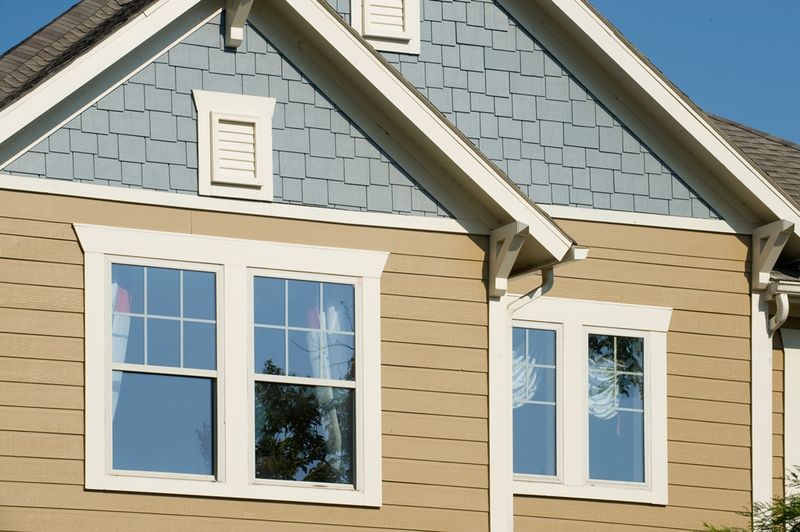
Without question you should invest your money in Fiber Cement Siding for the following reasons:
1. Authentic and more tranditional appearance.
2. Better fire rating.
3. Does not fade like vinyl.
4. Higher Return on Investment.
5. The ability to paint your house should you choose, down the road.
6. Will not warp, buckle or move on the walls.
7. The trim finshes that can be achieved with Fiber Cement are not possible with vinyl.
How would you like to have been the last person on your block to have bought Aluminum Siding 30 years ago? That is the reality of today's exterior cladding market. The vinyl industry is scambling but have yet to come up with a viable alternative to Fiber Cement. There are some new composites that are starting to make inroads but they are still too costly and are in limitied profiles.
Be sure to choose a Perfered James Hardie Contractor so you know all the best practices will be followed in accourdace with the manufactuere's specifications.
Unlike vinyl, Hardie Board needs a skilled craftsman to insure a propoer and long lasting installation.
Michael Damora
K & B Home Remodelers

Popular questions
Popular topics
Featured Guildmembers

Clarke Contractors, Inc.
AASI Home Improvement Systems

Mosby Building Arts

Murray Lampert Design, Build, Remodel


RGS Exteriors

HDR Remodeling
Da Vinci Cabinetry
Myers Homes
Sea Island Builders
Croixco Construction
VTS Homes, Inc.

K & B Home Remodelers, LLC