Dan Vorona asked:

May 8, 2014
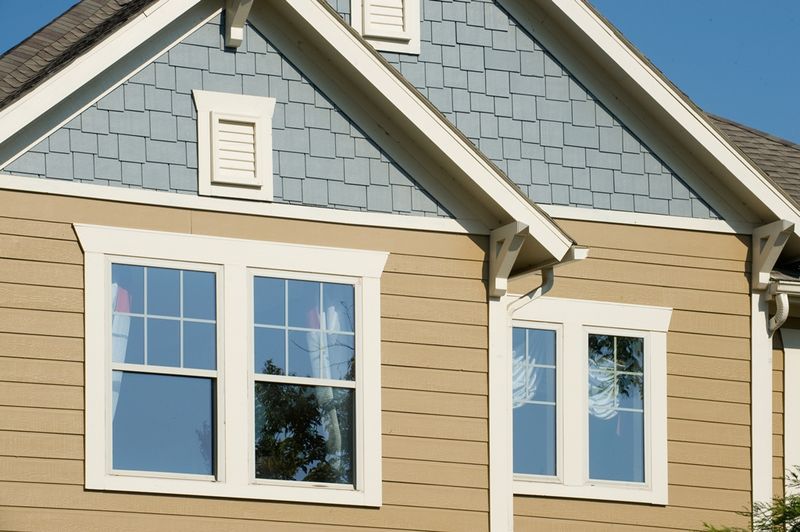
What kind of siding should I install? Hardie Board, or Vinyl with foam backing?
May 11, 2014

You mentioned this room being over a crawl space. We have found that most spaces are incorrectly conditioned.....or should I say say, not conditioned at all. Insulation is typically installed within the floor joist, leaving the crawlspace open and unconditioned. The foundation walls and ground should have a vapor barrier installed over them and insulation should be installed around the perimeter. You wouldn't do the wall that connects to the main house. You want this space to be treated like an extension of the basement.

Dan Vorona asked:

May 8, 2014
What kind of siding should I install? Hardie Board, or Vinyl with foam backing?

Michelle Slowe answered:

May 8, 2014

We at NEWPRO have a alternate view from our industry colleague, Mr. Damora. Since the greatest concern you voiced was the lack of insulation in your extension, we recommend Vinyl Composite Siding, also know as Insulated Vinyl Siding. 

Hardie Plank is a cement board; it's composition is sand and water. It is heavy on the wall and provides no insulation value. Formed to resemble wood, it fails to provide a deep, rich grain and does not come close to the look of wood. It is highly susceptible to mold and mildew. Hardie Plank has many seams and the seams must be sealed or water can infiltrate behind the siding. It can crack and if it does, you must tear the whole wall down in order to replace just one plank. It also is not maintenance free and requires painting every 10 years.

Insulated Vinyl Siding solves all of the aforementioned problems. It has high R-value, some up to 5.3, and has the potential to yield an 80% return on investment due to the increased energy efficiency and lower energy bills. You can learn more about this from the highly respected Remodeling Magazine's Cost to Value 2014 Report.

Additional benefits of Insulated Vinyl Siding include:

  • Having a deep, rich grain and a real wood look
  • There are less seams, which are water-tight
  • It rarely ever needs painting
  • It is mold and mildew resistant
  • There are far less installation problems and less likely to need repairs.
  • If repairs are needed, its easy to replace a single panel. 

I hope this information is helpful. Being located in Massachusetts, we didn't get nearly as rough of a winter as the Chicago area, but we can certainly understand why you put insulation so high on your Siding Needs List! 

All the best,

Michelle Slowe

NEWPRO

Dan Vorona asked:

May 8, 2014
What kind of siding should I install? Hardie Board, or Vinyl with foam backing?
May 8, 2014

Without question you should invest your money in Fiber Cement Siding for the following reasons:

1. Authentic and more tranditional appearance.

2. Better fire rating.

3. Does not fade like vinyl.

4. Higher Return on Investment. 

5. The ability to paint your house should you choose, down the road.

6. Will not warp, buckle or move on the walls.

7. The trim finshes that can be achieved with Fiber Cement are not possible with vinyl.

How would you like to have been the last person on your block to have bought Aluminum Siding 30 years ago?  That is the reality of today's exterior cladding market.  The vinyl industry is scambling but have yet to come up with a viable alternative to Fiber Cement. There are some new composites that are starting to make inroads but they are still too costly and are in limitied profiles.

Be sure to choose a Perfered James Hardie Contractor so you know all the best practices will be followed in accourdace with the manufactuere's specifications.

Unlike vinyl, Hardie Board needs a skilled craftsman to insure a propoer and long lasting installation.

Michael Damora

K & B Home Remodelers 

Dan Vorona asked:

May 8, 2014
What kind of siding should I install? Hardie Board, or Vinyl with foam backing? I've got 46 year old extension on the back of my house. We just bought the house 2 years ago, but supposedly the room was originally build as a 3 season room and someone through in some ventilation and converted it a bedroom. Some people have suggested Hardie board, some others have suggested a vinyl siding with a foam backing such as Craneboard. Right now there is 0 insulation on the outside under the existing aluminum siding. The room is extremely cold, it has a flat roof, and a old crawl space under it. Tearing it down is not an option at this time. I know I need new windows as well since they are original. All contractors are telling me they will install a 3/4" to 1.5" insulating foam board first, then a Tyvek wrap, and then one of the mentioned sidings. I live near Chicago, so this winter the room was almost unusable. We've done a lot of research, but are still confused on what siding and insulation combations should really be used. Suggestions?
Last edited May 8, 2014 1:52pm
Answers
10
Comment
Hide Comment
1
Flag

Alex Graham asked:

Feb 17, 2014
Should we use spray foam insulation or batt insulation?
May 2, 2014

I would encourage you to read up on SPF and if you do go that route, make sure you get a great and insured installer.  SPF does have additional benefit from and air sealing standpoint but beyond the airtightness improvements, does not (in the case of OC SPF) have any greater R-Value than traditional batting assuming that both are in an static air environment.  Best thing you can do from a real high performance wall assembly is to thermally uncouple the exterior wall from the framing.  This will net you a much higher performance assembly than SPF alone but should be done by someone that is familiar with this approach and applications. 

SPF is great but I prefer it to be used as an air sealant first and foremost. 

Educate yourself on the pros and cons before you engage in an insulation schedule. 

Eric Novotny

Alex Graham asked:

Feb 17, 2014
Should we use spray foam insulation or batt insulation?

Eric Consuegra answered:

Apr 29, 2014

Hey Alex, 

?I would say that close cell spray foam insulation is the way to go if your budget allows for it.  Although it's much more expensive than batt insulation, the long term savings on your energy bills will be far greater.? Hope this helps! 

Cheers, 

Eric Consuegra, AROCON Roofing and Construction, LLC

Alex Graham asked:

Feb 17, 2014
Should we use spray foam insulation or batt insulation?
Apr 29, 2014

Spray Foam. Much better insulator and fills any gaps that might otherwise be missed.

Alex Graham asked:

Feb 17, 2014
What are the most cost effective things I can do to improve my home's energy efficiency?

Robert Shaw of Solare Energy PRO answered:

Apr 28, 2014

With current financing options that are available, the best return-on-investment is to go solar!  It may seem expensive to install a solar panel system, but with current financing options such as $0/down home-equity loans, you'll see immediate cash flow savings!

Solare Energy has been serving San Diego for 25 years and provides our customers with a free energy audit and rate analysis before designing a solar panel system for their homes.  This allows us to accurately size the system to your energy consumption needs and get you the best value for your investment.

Learn more at www.SolareEnergy.com or call 858-547-4300 for San Diego area solar installations.

Rob Shaw
Marketing Manager
Solare Energy, Inc.
San Diego, CA

Alex Graham asked:

Feb 17, 2014
What are the most cost effective things I can do to improve my home's energy efficiency?

Alex Bardi answered:

Apr 17, 2014

Definitely replace your air filters every single month as this is a big contributor to a home's energy efficiency when it comes to HVAC

Alex Graham asked:

Feb 17, 2014
What are the most cost effective things I can do to improve my home's energy efficiency?
Apr 17, 2014

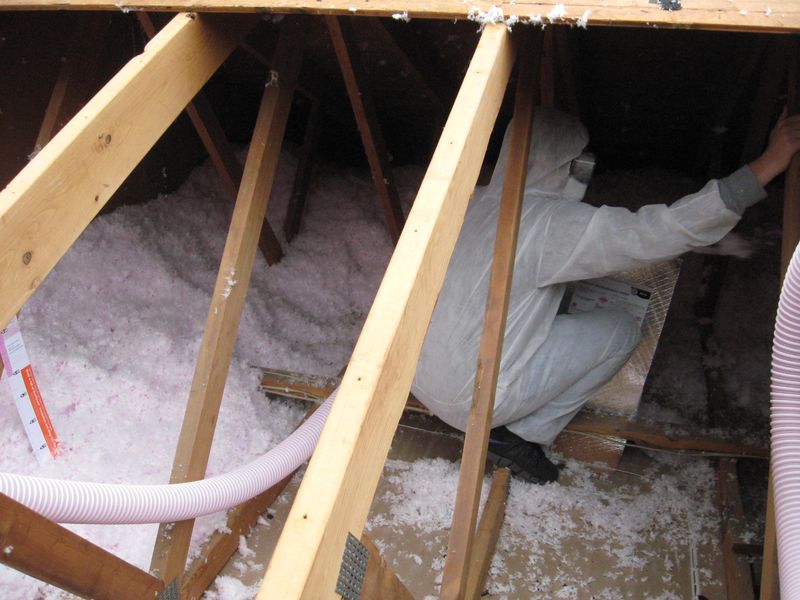
Check seals on doors & windows.  Replace single pane windows with newer products.  Check the attic for insulation.  Loose fill, blown in insulation is the best.  Make sure to seal any spots where air is escaping INTO the attic first.  Also make sure your attic has both adequate intake AND exhaust ventilation.  Make sure not to clog the airflow from the soffit area and the attic space by using Baffles as seen in the picture.  Check out YouTube for other great suggestions. 

Alex Graham asked:

Feb 17, 2014
What are the most cost effective things I can do to improve my home's energy efficiency?
Feb 20, 2014

Air sealing and insulation are the two biggest things you can do to globally improve the efficiency of the home. 

There are several articles on this application and I have yet to be in a home that didn't need it. 

Tightening up the envelope across the attic surface will lessen air infiltration at all the other areas of the home. 

Alex Graham asked:

Feb 17, 2014
What are the most cost effective things I can do to improve my home's energy efficiency?
Feb 19, 2014

Verify that all window and door seals/weatherstriping is in good shape.

Check to be sure doors and windows are caulked properly (no gaps, cracks or missing).

If you have an attic access, treat it like door opening and seal properly. If possible, create an insulated cover to go over it in the attic.

Check HVAC ductwork for leaks and seal with foil tape or mastic.

Wrap your hot water heater in a blanket.

John Ford asked:

Feb 17, 2014
Looking for tips on how to do a home garage insulation project
Feb 19, 2014

John,

Are you referring to insulating the ceiling of the garage (i.e. cold floors above)?   Will you be dropping the ceiling or are you looking for options with minimal disturbance?

John Ford asked:

Feb 18, 2014
Ideas for better insulation when the master bedroom is above the garage?
Feb 18, 2014

Hello John,

STEP 1.  This is a very common for homes with room(s) obove a garage.  Replacing the window (s) in the bedroom  may not solve your entire problem if the glass package you select does not include a high performance  heat reflectant type glass.   Which ever manufacturer you decide, its best to pay the additional cost and upgrade to thier best performance glass.  If you have already invested in new windows then check your paperwork to see if there is a greater performance glass option you can upgrade with for that type window .   This is a simple process and can greatly reduce your Solar Heat Gain for minimal investment.

STEP 2.  Select a certified insulation professional in your area to provide you with a "critical point air seal".  Properly applied by a certified professional at upper and lower rim joists in this room aproximatly  1' in width by 2" in thickness. Air sealing the upper and lower rim is a minimal investment  and provides  a significant and noticable change in comfort with a quick ROI.  Consider this service for the entire home.

Warm regards

Colorado Home Exterior

Show More