Robert Bowers asked:
May 2, 2019




Go visit the neighbors or take them to breakfast or dinner. Or, send them a letter. Bring a note pad and take any notes regarding their concerns. Explain that you take pride in your home and will be doing some remodelling. This only helps the neighborhood home values as well as theirs.


There is a great resource that we point our clients to when trying to determine "how much things cost" in general. There are so many different variables that go in to a project that it is hard to really throw out a figure and say "Hey, a bathroom remodel is going to cost XXXX" without knowing the location of the project, how big the bathroom is, what level of finish, etc.....
Remodeling Magazine does a survey every year of 35 common remodeling projects, and what they actually cost across the nation. They publish these results, and categorize them by location. Their survey is really great because they actually give you an example of a project, and a laundry list of what goes in to it, and a typical price that would be associated with that remodeling project. We find that it is a really great resource for trying to determine ballpark figures and get a good idea of what things cost around you.
Here is the link to the 2014 report: http://www.remodeling.hw.net/cost-vs-value/2014/



The short answer on this is - $900-$1,250.00 - Inclusive (Range in price is due to the amount of prep work and current condition)
You will want your vendor to do the following:
**** You will also want a life time warranty on quality and repairs (Excluding Wear and Tear)

Those who are dedicated should Come. If not look to another level of standards.
The GuildQuality Program is a great way to focus on what is important, The Client. The Surveys allow the Client to feedback to the Builders or contractors. To ensure a great achivment build the GQ principals and ethos into your interactions. It's not easy although separation from your peers shines. If you are in the Lowcountry stop by www.gaviganhomes.com
Billy


A New Construction window includes nailing fins used to fasten the window in place and to flash it, helping to make it airtight and waterproof. This usually requires installation of new interior woodwork, and sometimes touch-up painting of the interior drywall. It also can require removal of the siding around the window, or new wide trim installation, depending on circumstances.
A replacement window fits inside of the current window frame, leaving the original exterior & interior window frame & trim in place. This is a quicker and less expensive method of replacing windows. But it can also leave existing problems in place. IE, if there is air leakage between the existing window jamb and rough opening, a replacement window will not solve it. If there is rotted wood, the rotted wood often gets covered by aluminum cladding but is not necessarily removed/repaired.
There are some good companies who do a good job of replacement winodws and I'm not putting down the good ones. There are also some really bad ones, who sell throw-away window products that are a good stop-gap measure. IE, replace 2 worst windows while you wait to replace the entire house full of windows and do new siding and energy improvements all at once.
For this reason, my company almost always installs New Construction windows and usually does so at the same time as a whole-house improvement with better insulation, air sealing, and new siding-soffit-fascia as well. It's the best practice if its what your home needs and you can afford to do it right. I suggest saving up to do it right, even if you need to live with a deteriorating product a little longer. It's better for your home in the long run, and better for our nation's housing stock as well!
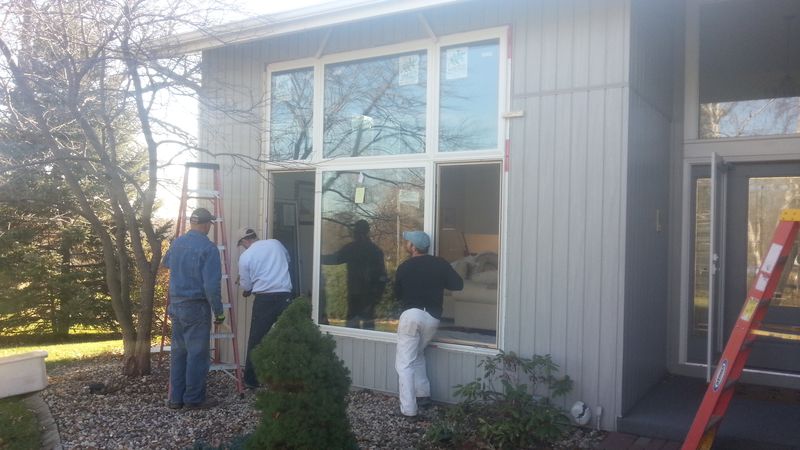
The photos below show before, during, and after-- a new construction window, without installing new siding.
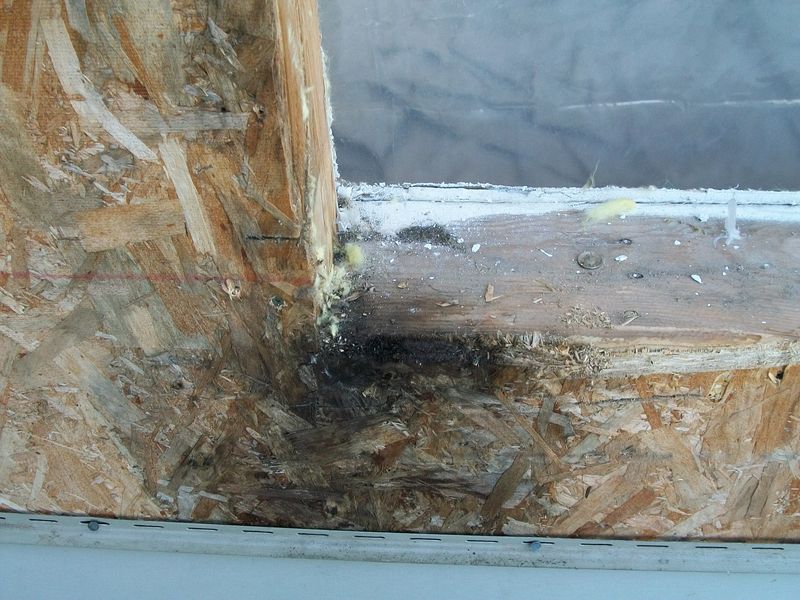
Showing some rough-construction photos too of the type of damage that we often discover and fix. How we install peel-n-stick flashing to make a window replacement be "as-good" as a new home construction. If we're replacing the siding, we can literally do so. WIthout replacing siding, we're limited to the amount of surface we have exposed.






The first thing to reduce energy is to see where it is being wasted.
An energy audit with blower door test and infared camera is the best place to start.
The list of upgrades range from adding insulation, to replacing HVAC systems and everything in beteen, such as new windows and doors to installing smart theromstats. But because each home is different and has different needs the only way to be sure your upgrades are right for your home is to start with an energy audit.